
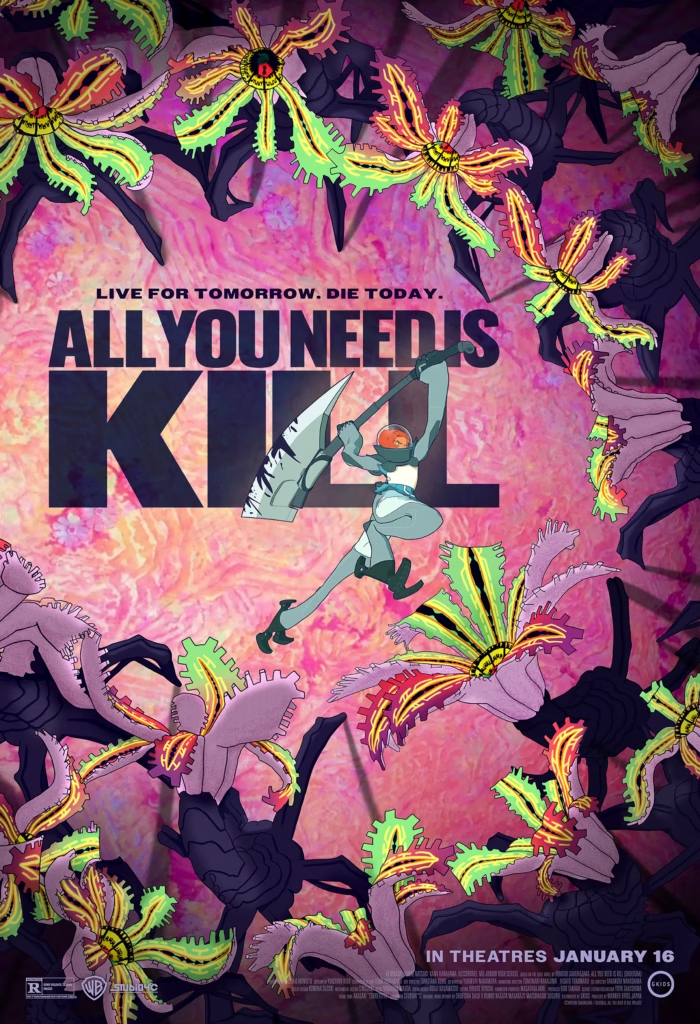
I’m contemplating continuing the Miso at the Movies column title, but I do enjoy the alliteration. I was able to watch Studio 4°C’s produced anime film All You Need is Kill. Loosely based on the novel by Hiroshi Sakurazaka, this movie takes the established premise of previous adaptations (mainly the manga and American film Edge of Tomorrow) and throws it away for something different. While the results can be a bit mixed, All You Need is Kill is a vibrant trip with an interesting time travel mechanic.
What is All You Need is Kill?
Unlike the original novel (and other adaptations), this film centers around the female protagonist Rita as she does her day-to-day routine as a worker trying to harvest the mysterious flower Darol. Propping up exactly one year ago, the alien structure ominously lingers in the background, a docile location where volunteers grab resources. On this anniversary, Darol wakes up and begins an alien invasion, one where everyone dies.
However, Rita ends up waking up to the day of the invasion, seemingly no worse for wear. She unfortunately gets to relive her death every single time, but she loops back to the morning once this happens. Struggling to get her bearings together, Rita needs to find out what’s going on with Darol, as well as how to equip herself for the incoming invasion. Thankfully, she has her memories intact with each death, so she can receive training and more information on how to move forward with her battles.
During her time loop journey, she meets Keiji, a reclusive boy that’s been noticing Rita’s efforts. After a bit of practice, the two will become unlikely heroes in a world that will need their help if they have a shot at surviving the next day.
Another Side, Another Story
(Yes, I’m aware I used this in another column of mine, I think it works perfectly here.)
The biggest deviance of All You Need is Kill from its source material is the fact that the action shifts to Rita’s perspective rather than Keiji’s. Another huge change is the fact that they aren’t grizzled soldiers fighting a seemingly never-ending war but just volunteer workers trying to make heads or tails of the huge plant in the middle of the world. This change does change the narrative a lot, but it also makes the plot refreshing (this has been adapted into a manga, graphic novel, and an American-made film, so another perspective was needed).
The change to the characters’ personalities took some time to get used to, but I do appreciate that Rita isn’t the stoic hardened fighter she was in the original. She’s just a girl trying to get by, and ends up surviving more than she can handle. Keiji’s personality as a shy but optimistic boy helps as a foil to Rita’s character, and I thought the chemistry between the two was great. The circumstances with the time travel loop made me enjoy their dynamic much more (since they both retain their memories between loops). The relationship doesn’t seem one-sided since they simultaneously develop rather than just one character retaining their memories every time they die.
My Life is Like a Video Game
However, a lot of deviance from the source material means that a lot of pacing issues are present. The way that the time loops work functions like a video game, which is cool the first time the conflict between Rita and the aliens is presented. This is represented by cuts to black when she dies (with the gruesome details being shown or censored depending on what’s happening). The hard cuts back to the morning or to another battle make for a nice video game-esque structure, and the film conveys horror and comedy from this quite well.
Much like games with failure states for quick time events, some of Rita’s deaths can be amusing. However, the next few times this happens it can get repetitive. I kept thinking back to Haruhi Suzumiya’s Endless Eight arc and I can see the importance of showing the mundane nature of time looping, but it does make the movie drag on near the middle and end.
It gets even more frustrating when the loops slow down the action (since the heroes’ unsuccessful attempts need to be shown before they can make a successful one). If you can get used to this quirk and treat it like a multiple choice video game playthrough, this is much more palatable.
All You Need is Kill is a Visual Spectacle
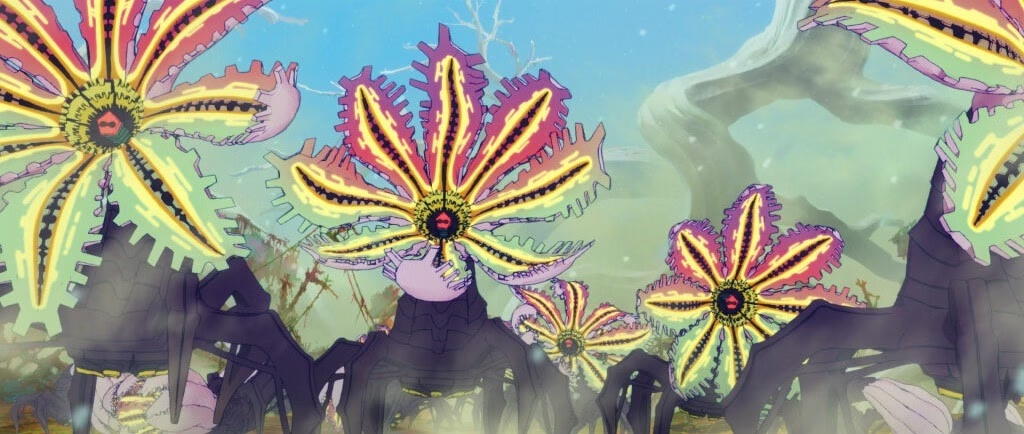
However, what I can say All You Need is Kill nails is the unique visual style. The bright, saturated colors (highlighted by much of the movie taking place in the morning and afternoon), give a vibrant breath of fresh air to the film. This style reminds me of Studio 4°C’s other movies Mind Game and Tekkonkinkreet, with some great flow.
The 3D hybrid style is something that I’ve been seeing more of in anime these days, and I’m loving it! Destruction and action sequences work well in this style, and the character designs are unique. Again, Rita and Keiji’s designs might look vastly different from their source material and it will take some time to acclimate.
Watch it Before it Leaves Theaters!
All You Need is Kill carves out its own identity from its source material, which unfortunately might dissuade fans of previous adaptations from watching it. I would implore you to go in with an open mind and just have it wash over you; it’s a fun action film with a lot of emotional punches peppered in to have you cheering for Rita and Keiji. The overall narrative does something I wasn’t expecting either, and I was pleasantly surprised with the buildup by the end of the film.
If you’re looking for a fun anime to start your year off, All You Need is Kill should be on your watchlist right now.
All You Need is Kill is distributed by GKIDS in North America and is currently playing in North American theaters, with subbed and dubbed screenings available. Stay tuned for more anime news and reviews here on Miso!
